GSA SER Contextual Backlinks
Understanding GSA SER Contextual Backlinks
In the automated SEO landscape, few tools have maintained the reputation and raw power of GSA Search Engine Ranker. The term GSA SER contextual backlinks refers to a refined linking approach where the software is configured to embed hyperlinks directly within the body of written content, rather than in sidebar blobs, comment sections, or profile fields. This method mimics natural editorial placements, making the backlinks look more organic to both users and search engine algorithms.
The Anatomy of a Contextual Backlink
A contextual backlink is surrounded by thematically relevant text. When a link appears inside a sentence or a paragraph that discusses a related topic, it carries significantly more semantic weight than a standalone URL. With GSA SER, achieving this at scale requires careful campaign design. Instead of spamming guestbook entries or forum profiles, the software targets platforms that allow article submissions, blog posts, wiki entries, and social network content streams where the link sits between words that provide context.
Why Context Matters More Than Volume
Search engines have evolved far beyond counting raw links. Modern algorithms evaluate link placement patterns, surrounding text vectors, and user engagement signals. GSA SER contextual backlinks aim to satisfy these quality metrics. A link embedded in a paragraph about "best VPN services" that points to a VPN review site is far more valuable than the same link tucked into a page footer. Context transforms a mechanical input into a relevance signal, reducing the chance of being flagged as manipulative spam.
How GSA SER Generates Contextual Placements
GSA SER is not a content writer, but it is an incredible submission engine. The contextual magic happens through the use of spun articles, dynamic inserts, and macro-based text generation. Users feed the tool with high-quality, heavily spun content that includes co-occurrence keywords and natural anchor text variations. The software then posts this content to thousands of web platforms that support article directories, press release sites, or blog networks, ensuring the link appears inside a block of readable text.
Platform Types That Support Contextual Backlinks
- Web 2.0 Blogs: Platforms like WordPress.com or Blogger allow users to create posts with full control over where links appear.
- Wiki Pages: Niche wikis and open edit mediawiki sites accept body content, making them ideal for contextual embedding.
- Document Sharing Sites: PDFs and documents submitted to sites like Scribd can contain in-text hyperlinks.
- Social Networks with Article Functions: Platforms such as Tumblr or Medium-type clones often support long-form posts with embedded links.
- Article Directories: Despite their reduced prominence, many remaining directories still host articles with in-content hyperlinks.
Setting Up GSA SER for Contextual Success
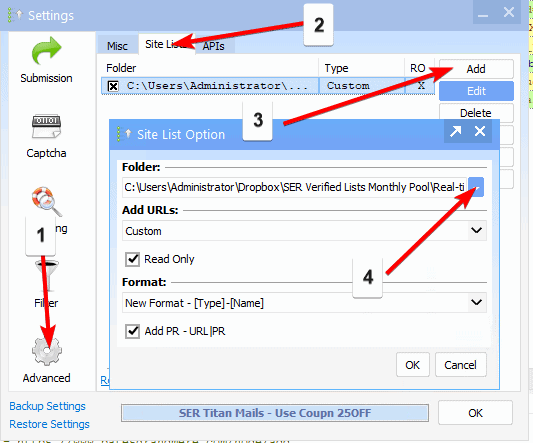
To generate true GSA SER contextual backlinks, you must move beyond default project settings. The engine selection and search engine queries need to target phrases like "write an article", "submit a guest post", or "edit page". Using footprint strings that indicate editable body fields is critical. Additionally, the content macros must be set to pull long-form paragraphs that wrap the %link% macro in a meaningful sentence. Randomly placing a link inside a list of keywords without grammatical structure fails the contextual test.
Content Quality and Spin Syntax
The biggest pitfall is poor readability. Auto-generated gibberish sentences with a link inserted will not sustain rankings. Advanced users craft multi-level spin syntax that produces grammatically coherent sentences. For example:
"When researching techniques for improving organic traffic, many marketers discover that strategic GSA SER contextual backlinks can significantly improve a site's authority."
Such variations, when processed, generate unique context around the link on every submission, reducing duplication footprints while maintaining a thematic tie.
The Role of Tiered Link Building
Contextual backlinks are often placed on Tier 1 properties—web 2.0 blogs, high-PA wiki pages, and document sites—that point directly to a money site. GSA SER then uses non-contextual methods (Tier 2 and Tier 3) to power up those Tier 1 contextual links. This layered architecture shields the main website from direct spam while allowing the Tier 1 contextual assets to accumulate genuine authority. The contextual tier acts as a buffer, making the overall profile appear more network-driven and less artificially pushed.
Risks and Quality Control
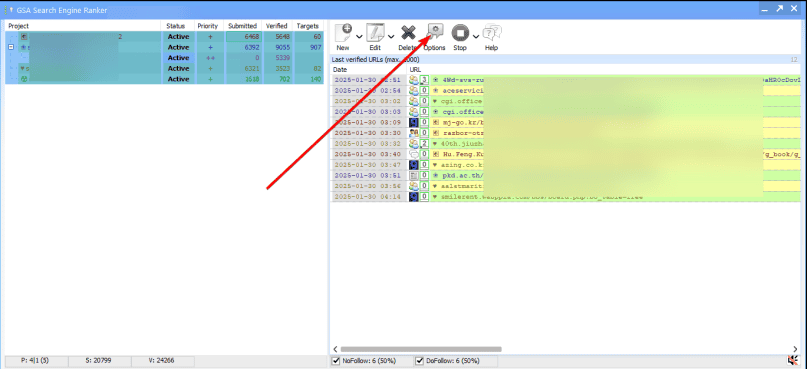
No automated system is risk-free. Even GSA SER contextual backlinks require careful monitoring. If the spin quality degrades or the selected platforms are loaded with spam, the links can become toxic. Regular verification with tools like GSA Captcha Breaker and proxy rotation is essential, but so is manual spot-checking. Search engines can deindex entire Tier 1 properties if they are flagged as pure here machine-generated content farms. The goal is to make the automated links indistinguishable from low-tier human guest posting, meaning the content must offer at least minimal informational value.
Anchor Text Diversity for Contextual Links
Context does not excuse anchor text over-optimization. When building these backlinks, you should use a mix of branded, naked URL, generic, and long-tail anchors. The surrounding text already supplies relevance, so the clickable text can afford to be more natural. A contextual link with the anchor "click here" surrounded by a detailed paragraph about your service often outperforms an exact-match anchor in a thin comment.
Measuring the Impact of Contextual Automation
Success with GSA SER contextual backlinks is measured not just by the explosion in referring domains but by improved keyword rankings on pages that received these Tier 1 connections. Track indexation rates of your Tier 1 properties using indexing services or secondary pinging campaigns. A well-oiled contextual campaign will see steady movement for mid-tail keywords as the content-surrounded backlinks pass topical authority and PageRank to the destination pages.
Common Misconceptions
A frequent mistake is assuming any link inside a body tag is contextual. True GSA SER contextual backlinks appear within an informational paragraph that shares a semantic bond with the target page. Links in "Recent Posts" widgets, footer widgets, or automated aggregator blocks do not meet this standard, even if they are technically inside the HTML body. The software’s filter settings must be fine-tuned to reject placements that lack sufficient preceding and following text nodes.
Future-Proofing Your Campaign
As search engines integrate natural language understanding more deeply, the line between human-written and machine-generated content will blur if spin syntax is sophisticated enough. Incorporating LSI keywords, answering user questions, and building multi-page web 2.0 sites through GSA SER can turn a simple contextual blasts into a network of micro-assets. When a contextual backlink sits within a 500-word article that answers a specific query, it ceases to be merely a link and becomes a genuine entry point for traffic.
Ultimately, the GSA SER contextual backlinks strategy bridges the gap between massive automation and the nuanced demands of semantic search. Success lies not in the tool’s brute force but in the user’s ability to configure it to mimic the editorial signals that search engines crave.